Anatomy Line Icons Medical Biology SVG
First Impression: Clean, Calm, and Quietly Confident
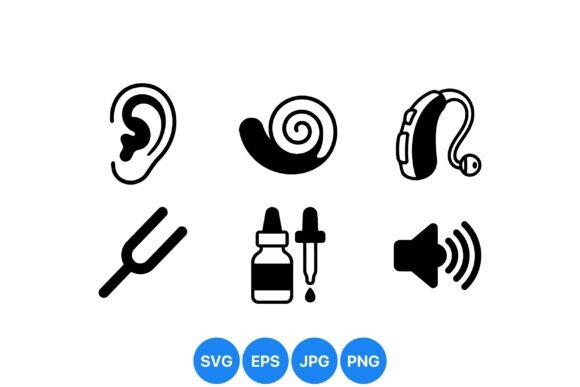
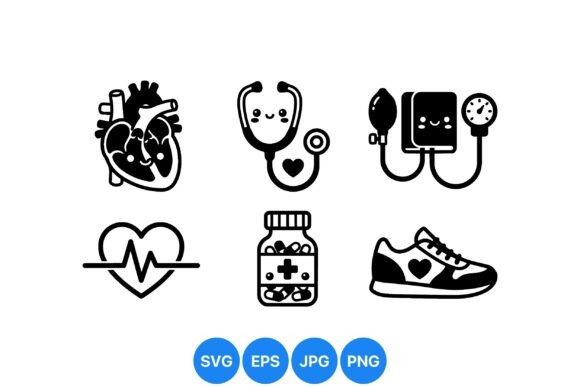
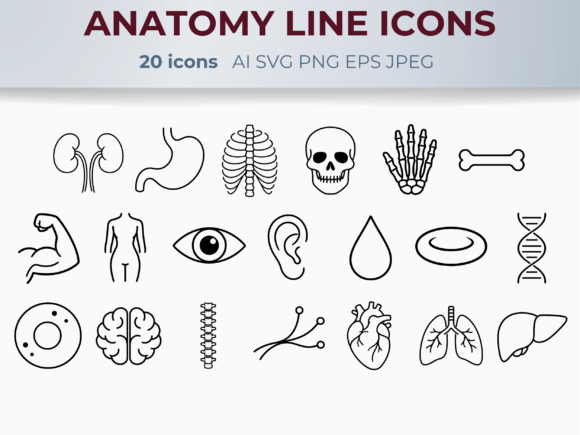
Opening Anatomy Line Icons Medical Biology SVG feels like stepping into a well-lit anatomy lab—quiet, precise, and thoughtfully curated. These aren’t flashy or cartoonish; they’re 20 minimal outline icons that speak in quiet authority: brain, spine, heart, ribcage, femur, vertebrae, ear, eye, lung, kidney, DNA helix, neuron, hand skeleton, foot bones, pelvis, liver, stomach, trachea, skull, and a subtle double helix motif. The lines are consistent in weight, evenly spaced, and deliberately uncluttered—no shading, no gradients, no fill-heavy zones. That’s exactly what makes them promising for embroidery: clean vectors translate more reliably to stitch paths, especially when you’re working with satin or running stitch outlines.
A Real Project Test: Embroidering a Nurse’s Tote Bag
I recently prepped a custom embroidered tote for a pediatric nurse launching her side hustle—“Tiny Hearts Pediatrics.” I chose the heart + ribcage combo from Anatomy Line Icons Medical Biology SVG and scaled it to 3.2” wide on a natural canvas tote. Why this set worked so well: the open negative space between lines gave breathing room for stitching, and the moderate line thickness (neither too spindly nor overly bold) held up beautifully at that size. On the finished bag, the design reads clearly from six feet away but doesn’t shout—it feels professional, warm, and human-centered. Customers commented on how “refined” and “not clinical” it looked—exactly the tone a wellness-adjacent small business needs.
Where It Shines (and Where It Asks for Care)
Anatomy Line Icons Medical Biology SVG excels in projects where subtlety builds trust: baby onesies (soft heart or ear icon), linen pillow covers for nursery decor, minimalist aprons for holistic practitioners, tea towels for med students, or even discreet embroidery on the cuff of a lab coat. It also translates cleanly into embroidered patches—especially when paired with a simple border stitch or light fill behind one key element (like a faint satin-stitched heart center).
But here’s where attention matters: avoid using the smallest icons (like the neuron or inner ear) below 1.8” without testing. On stretchy fabric—think cotton-spandex tees or baby knit bodysuits—the fine branching lines can distort if stabilizer isn’t layered correctly. And on dark fabrics? Run a quick black-and-white mockup first. Some icons rely on contrast more than others (the skull reads instantly; the pelvis needs slightly bolder thread or a tiny fill echo to land clearly).
What It Adds to Your Finished Product
This isn’t just decoration—it’s visual shorthand with emotional resonance. A well-placed anatomy icon signals care, expertise, curiosity, or quiet pride in science and the body. For Etsy sellers, that elevates perceived value: a $28 embroidered sweatshirt with a crisp spine icon feels intentional, not generic. For craft fair shoppers, it sparks recognition and conversation (“Oh—you’re in med school too?”). And for boutique branding? It supports consistency across digital mockups, packaging stickers, and physical goods—because these icons share the same visual grammar: balanced, legible, calm.
Design Notes Every Embroiderer Should Check Before Stitching
- Test on scrap fabric first—especially if using textured weaves (burlap, heavy linen) or thin knits. Outline-heavy designs can snag or float without proper stabilizer choice.
- Review stitch density—since Anatomy Line Icons Medical Biology SVG is line-based, most versions will use running or satin stitch. Confirm there’s no unintended fill stitch buildup in tight curves (e.g., the inner loop of the ear or the twist in the DNA helix).
- Confirm hoop size compatibility—some icons work cleanly in a 4×4 hoop, but pairing two (like heart + brain) may require 5×7. Don’t assume scaling won’t affect stitch integrity.
- Inspect small details—zoom in on vector paths before converting to embroidery file. Are anchor points smooth? Are overlapping lines trimmed? Jagged nodes become skipped stitches.
- Check thread color contrast—light gray thread on oatmeal canvas? Beautiful. Same thread on navy twill? Nearly invisible. Try a high-contrast combo (navy thread on cream) for maximum clarity.
- Use appropriate stabilizer—cutaway for stable wovens, tear-away for lightweight cottons, and soft cutaway for knits. These icons don’t have dense fills, but clean lines still need foundation.
- Verify licensing—this is a Graphics product intended for commercial embroidery use, but always confirm whether redistribution of the digital embroidery file itself is permitted if you’re selling digital assets or kits.
Not Just for Medical Themes—A Quiet Design Chameleon
Don’t box Anatomy Line Icons Medical Biology SVG into scrubs and stethoscopes. I’ve used the simplified femur icon as a subtle motif on hiking apparel (“strong bones, strong trails”), the DNA helix on eco-friendly tote bags (“genetically wired for nature”), and the ear icon on artisanal candle labels (“listen closely to scent”). Its minimalism gives it crossover appeal—ideal for educators, therapists, yoga studios, science teachers, and even tattoo artists sourcing reference art. It works because it doesn’t over-explain. It invites interpretation while staying grounded in real form.
Final Thought: A Thoughtful Tool, Not a Trendy Gimmick
Anatomy Line Icons Medical Biology SVG won’t go viral overnight—but it will earn repeat use. It’s the kind of design asset that quietly strengthens your portfolio, builds customer trust through consistency, and holds up wash after wash on a baby blanket or clinic apron. It’s not loud. It’s not complicated. But in the hands of a thoughtful embroiderer or small shop owner, it becomes part of something warmer, smarter, and more human. That’s the mark of good design—not flash, but function, feeling, and finish.