FREE Sketch Medical Genetics Icon
A Designer’s First Glance: Clean, Calm, and Purposeful
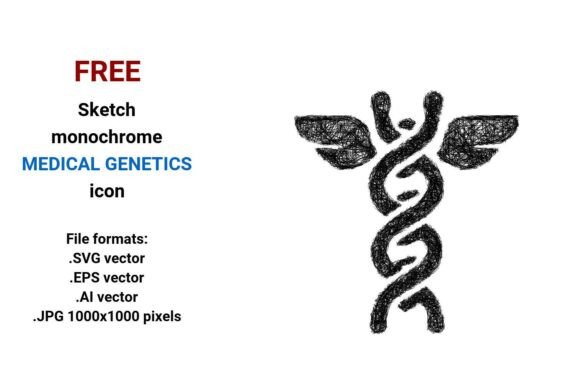
When I opened FREE Sketch Medical Genetics Icon, my first thought wasn’t “Oh, another medical symbol.” It was, “This feels like a quiet conversation—not a loud announcement.” The sketch-style linework is confident but unhurried, with soft tapering strokes and intentional negative space. It’s not clinical in a cold way; it’s clinical in the way a thoughtful genetic counselor might sketch an idea on a notepad—clear, grounded, human-centered. That tone matters deeply when you’re stitching it onto a baby onesie or embroidering it onto a boutique apron for a genetics clinic’s staff gift. It doesn’t scream. It invites.
Where This Design Naturally Lives—in Real Embroidery Projects
I tested FREE Sketch Medical Genetics Icon as part of a small-batch embroidered tote bag series for a local university’s Department of Clinical Genetics. We paired it with minimalist sans-serif text (“Ask Me About Your Genes”) and stitched it on heavyweight natural canvas. The result? Instant cohesion. The sketch aesthetic translated beautifully into satin-stitched outlines and subtle fill-stitch interiors—no harsh edges, no visual competition with the fabric texture. It also worked surprisingly well on a lightweight cotton tea towel, where the looser weave could’ve swallowed finer details—but because the icon relies on bold, open shapes (not tiny crosshatches or micro-dots), it held up cleanly even at 3.5" wide.
This isn’t a design that fights its way onto stretchy t-shirt knits or curved cap fronts. But it *shines* on stable, medium-weight fabrics: denim jackets, linen pillow covers, organic-cotton sweatshirts, unbleached muslin baby blankets, and structured patch backings. As an embroidered patch, it reads clearly at 2.75"—ideal for lab coat lapels or graduation stoles. And because it’s black-and-white and line-based, it avoids the pitfalls of color registration or thread blending—making it forgiving for beginners and reliable for high-volume craft business runs.
Where to Pause—and Test—Before Stitching
Don’t assume FREE Sketch Medical Genetics Icon will behave the same on every surface. On thin, silky fabrics (like rayon challis or lightweight voile), the sketch lines can blur visually—even with proper cutaway stabilizer—because the stitch density needed to define those tapered ends may cause puckering. On dark fabrics, especially charcoal or navy, test your thread contrast early: standard white or light gray thread won’t pop without a shadow underlay or a carefully chosen off-white or cream thread.
Curved surfaces—like the front panel of a baseball cap—require special attention. The icon’s balanced symmetry helps, but avoid placing it too close to the seam ridge where distortion happens. And if you’re planning layered embroidery (say, over a printed fabric label or textured embroidery floss background), confirm that the outermost sketch lines remain legible after topstitching. Small hoop sizes (4x4 inch) work fine for the standard version—but zoom in on the .SVG or .AI file first: some vector anchors sit right at the edge. Trim a little breathing room before digitizing, especially if you’re converting this into a machine embroidery design yourself.
What It Adds—Beyond Just Looks
Using FREE Sketch Medical Genetics Icon elevates perceived value without adding complexity. On personalized gifts—a custom embroidered baby blanket for a genetic counselor’s newborn, or a holiday pillow cover for a med-school grad—it signals care and specificity. Customers don’t just see “a medical icon”; they recognize intention. That builds trust, especially for Etsy sellers and small shop owners whose buyers often seek meaning, not mass production.
For commercial embroidery projects—think clinic-branded apparel or conference swag—it reinforces professionalism without sterility. Unlike clip-art DNA helices or oversimplified double-helix logos, this sketch feels hand-drawn, considered, and quietly authoritative. It supports brand consistency when used alongside other clean, human-scaled design assets—especially since the .SVG and .EPS files scale crisply for both embroidery digitizing and printable mockups.
Practical Notes Every Embroidery Designer Should Keep Handy
- Always test on scrap fabric first—especially if using it for baby embroidery or sweatshirt embroidery, where comfort and durability matter most.
- Review stitch density in your embroidery software: sketch lines can easily become too dense if auto-digitized without adjustment. Lighten fill areas; keep outlines crisp but not heavy.
- Confirm hoop size compatibility before prepping production runs. The JPG is great for mockups, but for actual stitching, rely on the vector files (.SVG, .EPS, .AI) to maintain clarity at any scale.
- Inspect small details at 200% zoom: look for stray anchor points or overly tight corners that could snag thread during running stitch transitions.
- Test it in black-and-white mockups on both light and dark backgrounds—this design’s strength lies in its tonal simplicity, not color variation.
- Use medium-weight cutaway stabilizer for woven fabrics, and tear-away for stable knits. Skip fusible web unless you’re making an applique design—this icon works best as direct-embroidery, not layered fabric.
- Double-check licensing before selling finished products. Since it’s listed as a Freebie in the Graphics category, verify whether commercial use is permitted for your specific craft business model—especially if you plan to resell digital embroidery files or include it in a bundled digital product.
Final Thought: A Quiet Anchor in a Busy Niche
In a sea of flashy, over-rendered healthcare graphics, FREE Sketch Medical Genetics Icon stands out by doing less—and meaning more. It doesn’t try to explain genetics in one image. It offers a calm, recognizable visual shorthand that respects both the science and the people it serves. Whether you’re an Etsy seller building a niche collection around science-themed handmade products, a small shop owner curating boutique branding, or a hobbyist stitching heartfelt holiday embroidery for a loved one in the field—this icon earns its place. Not because it’s free, but because it’s thoughtful, adaptable, and quietly professional. Just remember: even the best digital embroidery file only becomes a strong finished product when matched with careful testing, smart stabilizing, and real-world context. Start there—and let the sketch speak for itself.