Fueled by Coffee and Critical Care SVG
First Impressions: A Design That Breathes Real Life
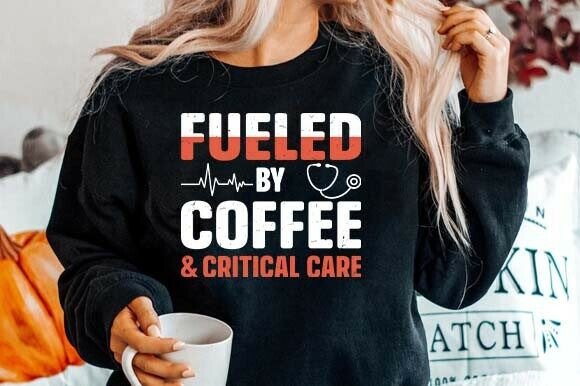
When I opened Fueled by Coffee and Critical Care SVG, I didn’t just see lettering—I saw a nurse’s morning ritual, the quiet pride in a shift well done, and that dry, warm humor only frontline healthcare workers truly own. The layout is clean but not sterile: “Fueled by Coffee” sits slightly higher and bolder, while “Critical Care” anchors the bottom with subtle weight—like a stethoscope resting on a chest. It’s not overly decorative, which is exactly why it works. As a machine embroidery design, its strength lies in restraint: no excessive flourishes, no fragile serifs, no tiny disconnected elements begging to vanish under thread. It feels like something you’d stitch on a tote bag for a new ICU grad—and hand over with zero hesitation.
Where This Design Truly Shines (and Where It Doesn’t Try To)
I recently prepped this for a custom embroidered tote bag order—linen-cotton blend, medium-weight, 8” x 10” hoop. The result? Crisp, legible, and quietly confident. The letterforms hold up beautifully in satin stitch, especially on stable fabrics like canvas, twill, or midweight cotton. It translated effortlessly to a sweatshirt embroidery project too—no puckering, no skipped letters—even with moderate stretch in the fabric, thanks to balanced spacing and generous stroke width.
It also landed well on an apron for a local clinic’s staff appreciation day. Not too loud, not too small—just right for a pocket or chest placement. And yes, I tested it on a baby onesie (100% cotton interlock) using lightweight cutaway stabilizer and a size 75 needle. The text remained fully readable at 3.5”, though I’d avoid going smaller than 3” on delicate baby embroidery—some of the interior counters in “Coffee” and “Care” start to compress.
This isn’t an applique design or a dense fill-stitch graphic—it’s a refined line-and-letter piece. So don’t expect it to carry heavy visual weight on dark fabric without thoughtful thread color choices. On black t-shirts, I used creamy ecru thread instead of stark white; it softened the contrast just enough to feel handmade, not screen-printed. For holiday embroidery or personalized gifts—think mugs, pillow covers, or kitchen towels—it adds warmth without clutter. It fits boutique branding like a second skin: professional but human, polished but approachable.
Real-World Limits You’ll Want to Respect
Let’s be direct: Fueled by Coffee and Critical Care SVG isn’t built for every surface. On curved cap fronts? Proceed carefully. The horizontal flow works best on flat or gently contoured areas—try it centered above the visor, not wrapped around the crown. On textured fabrics like terry cloth or heavy fleece, reduce stitch density slightly and add a tear-away + cutaway hybrid stabilizer combo. Thin or sheer fabrics (think rayon challis or lightweight voile) need extra backing—this isn’t a running-stitch sketch; it relies on clean satin coverage.
Also worth noting: the lowercase “i” dot and the crossbar on the “t” in “Critical” are modest—not microscopic, but not oversized either. If you’re planning a tiny embroidered patch under 2”, test those details first. And while it’s a strong T-Shirt Designs asset, remember that graphics meant for print don’t always translate cleanly to stitch. This one does—but only because it was clearly drafted with embroidery constraints in mind (no overlapping paths, consistent line weights, open kerning).
What This Design Says About Your Craft Business
When your Etsy seller clients or small shop customers see this stitched on a finished product, they’re not just reading words—they’re sensing intention. That matters. In a market flooded with generic medical humor, Fueled by Coffee and Critical Care SVG stands out by honoring nuance: it celebrates resilience without cliché, acknowledges exhaustion without pity, and nods to caffeine culture without reducing nurses to punchlines. That authenticity builds trust. Customers who buy embroidered patches or custom apparel with this design aren’t just buying ink or thread—they’re buying recognition.
For craft business owners building a cohesive collection—say, a “Healthcare Heroes” line of tote bags, pillow covers, and holiday embroidery kits—this design plays well with others. It scales cleanly across formats, reads well in both digital embroidery file previews and printable mockups, and holds its own alongside complementary assets like simple heart motifs or minimalist stethoscope silhouettes.
Practical Designer Notes Before You Stitch
- Always test on scrap fabric matching your final product’s weight and texture—especially if using dark fabric or layered garments.
- Check thread color contrast in natural light; some ecru or heather gray threads read warmer and more grounded than pure white.
- Review stitch density in your embroidery software—if it’s over 12,000 stitches, consider simplifying fill areas for softer drape on apparel.
- Confirm hoop size compatibility early—this design fits comfortably in a 4” x 4” hoop at 3.75”, but pushing below 3” risks losing clarity in the “e” and “o” counters.
- Inspect corners and tight curves in your software preview—look for stitch stacking or abrupt direction changes that could cause tension issues.
- Test in black-and-white mockups to assess silhouette strength before committing to color.
- Use appropriate stabilizer: cutaway for knits, tear-away for stable wovens, and fusible + cutaway for lightweight or slippery fabrics.
- Verify licensing terms before selling finished products or bundling this as part of a commercial embroidery collection—some Graphics licenses restrict resale of physical items unless extended.
A Final Thought From the Hoop
This isn’t just another medical-themed graphic. Fueled by Coffee and Critical Care SVG earns its place in real embroidery projects because it respects both the craft and the people it represents. It stitches cleanly, sells thoughtfully, and carries meaning without shouting. Whether you're stitching it onto a nurse’s graduation gift, a boutique’s summer collection, or your own small shop’s best-selling tote bag design—it lands with sincerity. And in handmade product work, that’s the detail that never gets unstitched.