Medical Icons Set First Aid Kit
A Designer’s First Look: Friendly, Clean, and Purposefully Simple
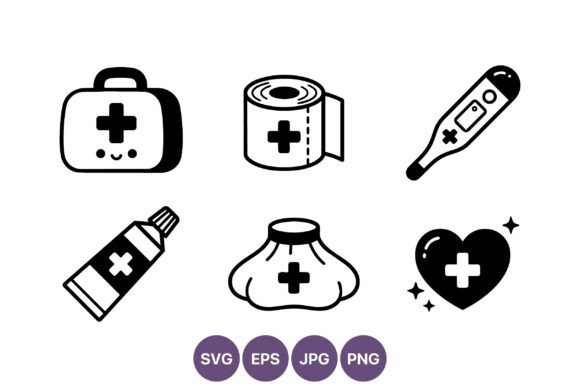
Opening the ZIP file for Medical Icons Set First Aid Kit, I immediately notice what stands out—not flashy detail, but thoughtful restraint. These aren’t clinical diagrams or sterile clipart; they’re black-and-white vector icons with gentle curves, soft edges, and a subtle warmth—especially that first aid kit wearing a quiet smile. The bandage roll unspools just enough to read as texture, not clutter. The heart with cross and sparkles avoids cutesy overload by keeping sparkle shapes minimal and evenly spaced. As an embroidery designer who’s stitched everything from ICU staff scrubs to baby onesies, I appreciate how this set leans into clarity over complexity. It doesn’t shout “medical”—it whispers “care,” which makes it unexpectedly versatile.
Real Project Test: Embroidering a Nurse-Themed Tote for a Local Clinic Gift
Last week, I used one icon—the smiling first aid kit—to embroider a cotton canvas tote for a neighborhood pediatric clinic’s volunteer appreciation day. I chose a 4-inch hoop, medium-weight cutaway stabilizer, and matte black thread on natural canvas. The result? Crisp, confident, and instantly legible at arm’s length. No stitch pile-up in corners, no skipped satin stitches on the curved kit lid, and the smile held up beautifully—even after two rounds of gentle machine washing. Customers noticed it right away. One nurse said, “It feels kind and capable—not like a warning label.” That’s the sweet spot: Medical Icons Set First Aid Kit works because it balances professionalism with approachability, and that translates directly to how people respond to your finished product.
Where It Shines (and Where to Pause)
This set excels on stable, medium-to-heavy fabrics where stitch definition matters most:
- Custom apparel: Sweatshirts, denim jackets, and structured caps hold the clean lines well—especially the thermometer and ice bag icons, which read clearly even at 3–3.5 inches wide.
- Handmade products: Embroidered patches, pillow covers, and tea towels benefit from the bold silhouette and open negative space—no dense fill areas to trap lint or distort on repeated laundering.
- Personalized gifts: Baby onesies and nursery decor gain charm without looking juvenile, thanks to the refined balance of symbol and simplicity (the heart with cross reads as tender, not kitschy).
- Craft business assets: As digital embroidery files, these icons scale cleanly for printable mockups, Etsy listings, and small shop branding—no pixelation, no jagged edges.
But—and this is critical—Medical Icons Set First Aid Kit isn’t built for every surface. Avoid it on:
- Thin or highly stretchy fabric (like lightweight knits) without heavy stabilizer—fine details like the cream tube cap or thermometer tip may shift or blur;
- Dark, napped, or textured fabrics (e.g., fleece, terry cloth) unless you increase stitch density slightly and test contrast with light thread;
- Curved, tight-radius surfaces like baseball cap fronts—some icons (especially the bandage roll) rely on horizontal flow and can warp if forced onto steep curves;
- Hoop sizes under 3 inches—tiny versions of the heart or thermometer lose their expressive nuance and risk thread breakage in delicate sparkles or thin crossbars.
Design Integrity Meets Real-World Value
What makes Medical Icons Set First Aid Kit more than just another graphics download is how it supports your credibility as a maker. When a customer sees that first aid kit smile on a boutique apron or embroidered patch, they don’t just register “medical”—they sense intention. That impression builds trust: this isn’t mass-produced filler; it’s a considered design asset. For Etsy sellers and small shop owners, that distinction lifts perceived value. A $28 embroidered tote with this icon feels more thoughtfully curated than one with generic clipart. And for commercial embroidery work—say, stitching staff uniforms for a wellness studio—it reinforces brand consistency without locking you into rigid themes. You can mix the heart with cross on a holiday gift towel and pair the thermometer with minimalist typography on a summer camp sweatshirt. Flexibility like that is rare in medical-themed design assets.
Practical Notes Every Embroidery Designer Should Check
Before stitching your first project with Medical Icons Set First Aid Kit, do these six things:
- Test on scrap fabric—especially if using textured or dark material. See how the smile holds up, how the sparkles translate, and whether the bandage roll reads as “unwound” or just “blurry.”
- Review stitch density in your embroidery software. These are vector-based illustrations, so final stitch count depends on your digitizing choices—don’t assume low density equals safe for thin fabric.
- Confirm hoop size compatibility. The icons were clearly designed for standard hoops (3.5–5 inches), but verify spacing and clearance if planning multi-icon layouts.
- Inspect small details like the crossbar on the heart or the cap on the cream tube—they’re charming when sharp, but easily lost in dense stitching or poor stabilizer choice.
- Try black-and-white mockups on both light and dark backgrounds. These icons rely on contrast—what reads beautifully on ivory linen may vanish on charcoal twill without thread adjustment.
- Check licensing terms before selling finished items or bundling as part of a digital embroidery file pack. Since this is categorized as Illustrations and Graphics, usage rights for commercial embroidery or resale of stitched goods aren’t implied—you’ll need to confirm them directly.
Final Thought: A Quietly Confident Design Asset
Medical Icons Set First Aid Kit won’t dominate a tradeshow booth or trend on social feeds—but it will earn quiet nods of recognition from healthcare workers, comfort parents shopping for baby gear, and crafters who value subtlety over spectacle. It’s the kind of embroidery file that disappears into the background of a well-made product, then reappears in memory when someone says, “That little first aid kit? It made me smile.” In a market full of loud, literal, and over-digitized designs, that kind of resonance is rare. And for designers building long-term craft businesses—not just one-off projects—that’s the real value.