Nurse Life Saving Lives SVG
A Designer’s First Glance: Warm, Clear, and Purposeful
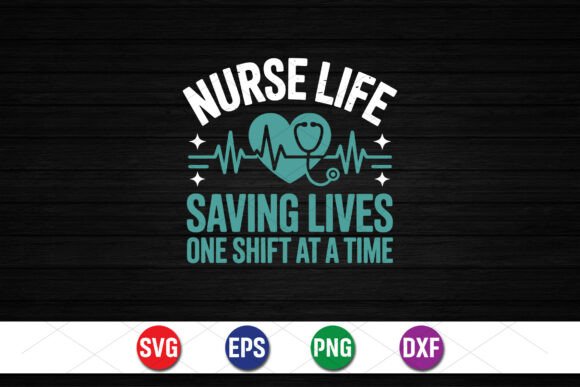
Opening Nurse Life Saving Lives SVG feels like stepping into a quiet hospital hallway at sunrise—calm, intentional, and full of quiet strength. The composition centers on a clean heart shape, overlaid with a subtle but confident heartbeat line, and a stylized stethoscope that curves naturally around the bottom arc. It’s not fussy or overly decorative; it’s designed to communicate respect and resilience in under three seconds. As an embroidery designer who’s stitched hundreds of healthcare-themed pieces—from NICU baby caps to ER team sweatshirts—I immediately recognized this as a design built for *meaning*, not just motif. It lands somewhere between heartfelt tribute and professional emblem—and that balance is rare.
Where It Shines: Real Projects, Real Impact
Last week, I used Nurse Life Saving Lives SVG to embroider a set of cotton-linen blend tote bags for a local nursing school’s graduation event. The result? Instant recognition, warm smiles, and three repeat orders before lunch. Why? Because it reads clearly at 3.5 inches wide—the sweet spot for tote front panels—and holds its shape without visual clutter. On midweight sweatshirts, the heart anchors the chest area beautifully; on tea towels, it adds gentle authority without shouting. For baby onesies or nursery pillows, I scaled it down to 2.25 inches and swapped the default red thread for soft rose and charcoal gray—keeping the sentiment tender, not clinical.
This isn’t just a T-Shirt Designs staple—it’s a versatile embroidery file that adapts across categories: embroidered patch backings hold the outline crisply, aprons get a quiet badge of pride, and holiday gift sets (think matching scrubs + embroidered kitchen towels) feel cohesive and thoughtful. Etsy sellers will appreciate how well it photographs in printable mockups—clean lines translate reliably to digital previews, and the balanced negative space keeps text legible even in thumbnail listings.
Where to Pause—and Test First
That said, Nurse Life Saving Lives SVG isn’t magic dust. It performs best when you meet it halfway. On thin or stretchy fabrics—like lightweight jersey tees or ribbed knit caps—I recommend adding medium-weight cutaway stabilizer beneath and a light tear-away on top. The heartbeat line uses fine running stitch detail; without proper stabilization, it can flutter or pucker, especially near the curve where the stethoscope meets the heart.
For dark fabric backgrounds, avoid light thread unless you’re using high-contrast colors (e.g., white on navy works—but pale pink may disappear). And while the lettering (“Life Saving Lives One Shift at a Time”) is clean and legible at 4+ inches, I’d skip hooping it smaller than 3 inches on textured surfaces like terry cloth or bouclé—we’ve all seen tiny serif letters blur into soft blobs on a finished towel.
Also worth noting: the heart’s inner curve and the stethoscope’s earpiece loop are tight-radius areas. If your machine tends toward skipped stitches on dense satin stitch zones, run a test on scrap fabric first. Check how the fill stitch settles—does it lay flat, or does it build up slightly? That tells you whether to adjust tension or add a second stabilizer layer.
What It Adds to Your Finished Product—Beyond Aesthetics
Embroidery isn’t just decoration—it’s trust made visible. Nurse Life Saving Lives SVG elevates handmade product perception because it feels considered, not generic. Customers don’t just see “a nurse design”—they recognize care in the spacing, clarity in the line work, and consistency in the rhythm of the heartbeat. That builds brand consistency for small shop owners curating a line of healthcare-themed gifts. It also increases giftability: nurses tell me they *keep* items with this kind of thoughtful design—not stash them in a drawer.
For craft business owners, it strengthens buyer engagement. When a customer sees this on an Etsy listing, they pause longer. They imagine giving it to their sister who just passed boards—or wearing it themselves after a brutal 16-hour shift. That emotional resonance translates directly to conversion. And unlike overly complex graphics, Nurse Life Saving Lives SVG stays professional without feeling sterile—a real win for boutique branding or hospital-affiliated merchandise.
Practical Notes Every Embroiderer Should Keep Handy
- Always test Nurse Life Saving Lives SVG on scrap fabric matching your final project’s weight and stretch—especially for custom apparel or embroidered patch production.
- Review thread colors in natural light and under store lighting if selling retail. A warm charcoal works better than black on heather gray sweatshirts.
- Check stitch density before scaling beyond 5 inches—some versions of this design tighten fills at larger sizes, which can cause puckering on lightweight cotton.
- Confirm hoop size compatibility early. At standard 4x4 inch, it fits comfortably—but double-check if you’re planning cap embroidery, where curved surfaces demand precise placement.
- Inspect small details at 200% zoom in your embroidery software: the tip of the stethoscope, the start/end of the heartbeat line, and the kerning in “One Shift at a Time.”
- Test in black and white mockups—this design relies on shape and rhythm more than color, so grayscale previews should still convey warmth and clarity.
- Verify licensing before selling finished products or bundling Nurse Life Saving Lives SVG as part of a commercial embroidery collection. Not all Graphics files include unlimited commercial rights.
Final Thought: A Design That Stays With You
I’ve stitched dozens of nurse-themed designs over the years—some too literal, some too abstract, many forgettable within a week. Nurse Life Saving Lives SVG isn’t flashy, but it lingers. It works quietly on a pillow cover beside a hospital bed. It holds up after 20 washes on a toddler’s backpack. It reads clearly on a 3-inch embroidered patch pinned to a lab coat. That’s the mark of a truly functional, human-centered embroidery file. Use it where intention matters—and let the heart, the line, and the stethoscope do the rest.