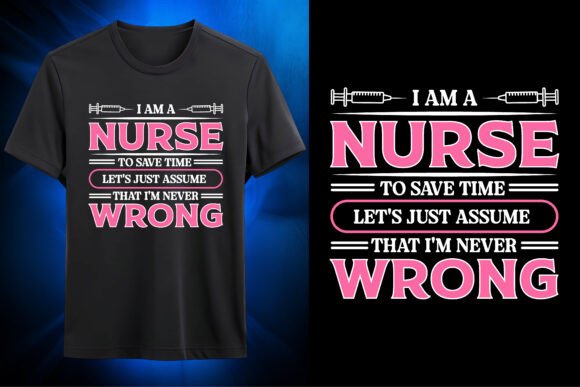
Nurse Never Wrong SVG Design
First Impressions: Charm, Clarity, and Quiet Confidence
When I opened the Nurse Never Wrong SVG Design for the first time, I didn’t see just text—I saw a warm, confident nod to nursing professionalism wrapped in approachable charm. The lettering is clean but not sterile; there’s subtle curvature in the “N” and soft weight variation that suggests hand-drawn care, not rigid digital rigidity. It’s not overly ornate—no excessive flourishes or distracting icons—so it breathes well on fabric. That simplicity is intentional, and it’s exactly why this design lands so well for real embroidery work: it prioritizes legibility over decoration, respect over cliché.
A Real-World Test: Embroidering a Nurse-Themed Tote for a Hospital Gift Shop
Last month, I used Nurse Never Wrong SVG Design to create a limited-run embroidered tote for a local hospital’s staff appreciation week. We chose natural canvas totes—medium-weight, slightly textured, and prone to puckering if stitch density isn’t managed. I converted the SVG into a machine embroidery design using my standard workflow, then ran test stitches on scrap fabric with tear-away stabilizer. What stood out immediately was how gracefully the letterforms held up at 3.5" wide—the recommended size for most tote applications. No crowding, no lost detail in the lowercase “e” or “r”, and the spacing between words gave the design room to land with quiet authority.
Where It Shines (and Why)
- Custom apparel: Works beautifully on sweatshirt embroidery—especially crewnecks and relaxed-fit hoodies—because the bold-yet-balanced weight reads clearly even through thicker fabric pile.
- Embroidered patch: Clean outlines and consistent stroke width make it ideal for iron-on or sew-on patches. No fine interior details to snag or fray.
- Baby embroidery: On onesies or burp cloths, it reads as sweet and sincere—not clinical—thanks to its gentle rhythm and open spacing.
- Holiday embroidery & personalized gift: Paired with a small heart or stethoscope icon (added separately), it becomes a thoughtful, gender-neutral gift for Nurse’s Week, graduation, or retirement.
- Craft business & Etsy seller use: As a standalone design asset, it supports cohesive branding—think matching tea towels, pillow covers, and aprons for a nurse-themed boutique line.
Where to Proceed Thoughtfully
This isn’t a one-size-fits-all embroidery file—and that’s a strength, not a limitation. Nurse Never Wrong SVG Design demands intentionality, especially on challenging substrates:
- Small hoop sizes (under 4"): At under 3", the lowercase letters begin to compress visually. If stitching for caps or kids’ hats, consider simplifying to uppercase only—or pair with a minimal icon to anchor the layout.
- Textured or stretchy fabric: On ribbed knits or jersey tees, use cut-away stabilizer underneath and a light topping to prevent thread sinking. The design’s moderate stitch density helps, but it won’t forgive poor stabilization.
- Dark fabric: While the SVG includes high-contrast JPEG and EPS files, always test thread colors in person. A soft heather gray or navy works better than black for warmth—and avoid white thread on black without topping.
- Curved surfaces (like baseball caps): The horizontal layout means it sits cleanly across the front panel—but avoid placing it too low on the crown where distortion creeps in.
- Frequent-wash items (baby clothes, kitchen towels): Confirm your fill stitch coverage is dense enough for durability, and avoid satin-stitch-only versions of the letters—they’ll wear faster than balanced fill + outline combos.
What This Design Says About Your Finished Product
Using Nurse Never Wrong SVG Design isn’t just about putting words on cloth—it’s about signaling care, credibility, and craft. When stitched cleanly, it elevates a plain sweatshirt into a meaningful handmade product. Customers notice the spacing. They feel the confidence in the kerning. They trust the restraint.
For Etsy sellers and small shop owners, that translates directly to perceived value: buyers pay more for items that look professionally considered—not mass-produced. And because the design avoids dated tropes (no red crosses, no cartoonish hearts), it stays relevant across seasons and generations. A new grad, a veteran ICU nurse, or a nursing student all recognize themselves in it—without needing explanation.
Practical Embroidery Designer Notes
- Always test Nurse Never Wrong SVG Design on scrap fabric *first*—especially if using it for commercial embroidery or client work.
- Check thread color contrast in both natural and artificial light. What reads well on screen may disappear on dark denim.
- Review stitch density before finalizing. If converting from SVG to embroidery format yourself, watch for overfilled areas in curves—adjust underlay as needed.
- Confirm hoop size compatibility. The design scales well, but extreme resizing (below 2.5" or above 6") may require manual re-spacing or stroke adjustment.
- Inspect small details at actual stitch-out size—not just on-screen. Tiny serifs or connecting strokes can vanish if digitized poorly.
- Test in black-and-white mockups to assess visual balance without color distraction.
- Compare performance on light vs. dark fabric backgrounds. Some fonts lose hierarchy when inverted—this one holds up, but verify with your thread palette.
- Use appropriate stabilizer: tear-away for stable wovens, cut-away for knits, and water-soluble topping for napped fabrics like fleece.
- Double-check licensing terms before selling finished products or bundling Nurse Never Wrong SVG Design with other digital embroidery files.
Final Thought: A Design That Earns Its Place
Nurse Never Wrong SVG Design doesn’t shout. It doesn’t need to. In a market saturated with rushed, trend-chasing graphics, this design earns its place by doing three things exceptionally well: it respects the wearer, honors the craft, and serves the project. Whether you’re stitching a single personalized gift or building a full T-Shirt Designs collection for your craft business, it’s the kind of Graphics asset that grows more valuable the more you use it—because it never asks the fabric, the machine, or the customer to compromise.