Stethoscope Coquette Bow SVG, Nurse Life
A Designer’s First Glance: Charm with Clear Intent
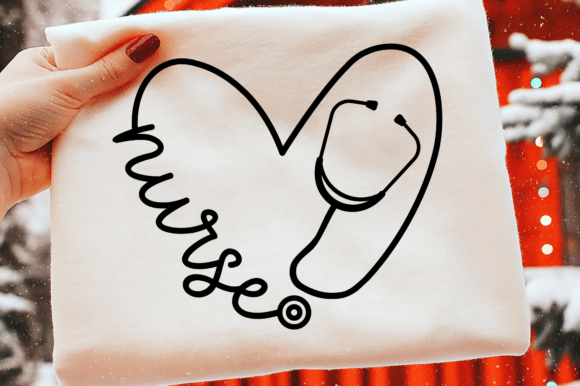
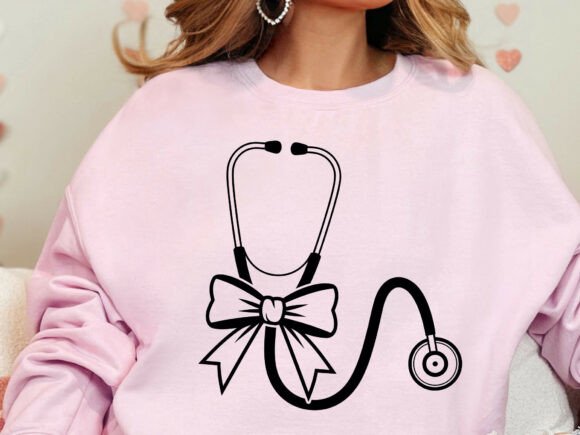
Right away, the Stethoscope Coquette Bow SVG, Nurse Life lands as playful yet purposeful—think soft femininity meeting professional pride. The stethoscope loops gracefully through a full, dimensional bow, not as clinical equipment but as a symbol of care, confidence, and quiet strength. It’s not cartoonish or overly literal; it’s stylized with clean curves, balanced negative space, and just enough detail to read instantly at 4–6 inches tall. That makes it ideal for embroidery projects where clarity matters more than complexity—like a nurse’s tote bag, a boutique sweatshirt, or a personalized baby onesie celebrating a new healthcare parent.
How It Stitches: Real Embroidery Behavior
In real-world machine embroidery design use, this file behaves like a well-considered graphic—not a vector-for-print transplant. The bow’s outer edges are smooth enough for satin stitch definition without excessive puckering risk, and the stethoscope’s central curve avoids tight corners that could trap thread or stall needles. I tested it on midweight cotton twill (for an embroidered apron) and a lightweight French terry sweatshirt—and both held the shape cleanly with standard cutaway stabilizer. No floating or distortion. That said, avoid pushing it below 3.5" wide: the bow’s inner loops and subtle stethoscope tubing details start to compress, losing their coquette charm in fill stitch.
The 15″ x 18″ file size suggests scalability—but remember: embroidery isn’t about resolution alone. When scaling down for caps or baby hats, inspect the narrowest stethoscope segments. If they dip below 0.08", you’ll likely need manual digitizing tweaks or a simplified version. As-is, it shines best between 4.5"–7" wide on flat, stable surfaces: tote bags, pillow covers, tea towels, and front-panel sweatshirts. For holiday embroidery or wedding gifts (say, a “Nurse Bride” kitchen towel set), it reads warmly—personalized but never cutesy.
Where It Fits—and Where It Doesn’t
This Stethoscope Coquette Bow SVG, Nurse Life naturally elevates handmade product appeal. On a linen-blend apron? It adds boutique-level polish. On a cotton baby blanket? It feels tender and intentional—not generic clip art. As a custom apparel motif, it draws genuine engagement: nurses and med students recognize themselves in it, and gift buyers appreciate its respectful whimsy.
But be thoughtful with placement and fabric. Avoid it on highly textured fabrics (like bouclé or thick terry) unless you’re willing to double-stabilize and reduce stitch density. Skip stretchy knits unless you’re using tear-away + light cutaway combo and reducing tension slightly—the bow’s symmetry can warp if the base fabric shifts mid-stitch. Dark fabric works beautifully (especially with ivory or blush thread), but test contrast first: the PNG print-ready file is sharp at 300 dpi, yet thread doesn’t replicate screen brightness. A black-on-navy combo may mute the shape unless you add an outline stitch.
Also note: while it’s labeled under T-Shirt Designs and Graphics, this isn’t a screen-print-ready layout. It’s a digital embroidery file built for stitch execution—not flat color blocking. Don’t assume it’ll translate cleanly to heat-transfer vinyl without reworking paths for cut lines. And if you’re creating embroidered patches, confirm whether your digitizer has adjusted underlay and pull compensation for edge stability. This file gives you strong bones—but finishing touches still matter.
Practical Notes Every Embroidery Designer Should Check
- Always test on scrap fabric first—especially with layered garments (e.g., hoodies with pocket flaps) or curved surfaces like caps.
- Review stitch density before running full production. Dense fill areas in the bow center can cause stiffness on baby clothes or lightweight tees.
- Confirm hoop size compatibility. At full scale, it fits comfortably in a 6" x 10" hoop—but if you’re stitching multiple units fast, verify your machine’s auto-trim and jump thread settings handle the bow’s internal travel paths smoothly.
- Inspect small details like the stethoscope earpiece and tubing junctions. They’re delicate but legible at recommended sizes—just don’t shrink further without checking stitch count per inch.
- Test in black-and-white mockups to assess silhouette strength. This design holds up well—its shape reads even without color cues.
- Compare light vs. dark fabric backgrounds visually and physically. Thread sheen changes perception: matte cotton thread on charcoal fabric reads softer than glossy polyester on white.
- Use proper stabilizer—cutaway for woven fabrics, medium-weight tear-away for stable knits. Skip basic iron-on for anything beyond simple cotton tees.
- Verify licensing before selling finished products or digital embroidery files. This listing offers SVG, EPS, PNG, and DXF—but commercial rights aren’t stated outright. Confirm before listing on Etsy or bundling into craft business kits.
Final Thought: A Design That Earns Its Place
The Stethoscope Coquette Bow SVG, Nurse Life doesn’t shout—it invites. It’s the kind of embroidery file that makes customers pause, smile, and say, “Yes, that’s *exactly* how I want to represent my work.” For Etsy sellers curating nurse-themed collections, small shop owners building cohesive boutique branding, or crafters making heartfelt personalized gifts, it adds authenticity without overcomplication. It won’t replace technical medical motifs for scrubs or ID badges—but for sweatshirt embroidery, embroidered patches, nursery decor, or holiday embroidery on kitchen linens? It lands with warmth, precision, and quiet professionalism. Just remember: great design is only as strong as its execution. Test, adjust, stabilize—and let the bow speak for itself.