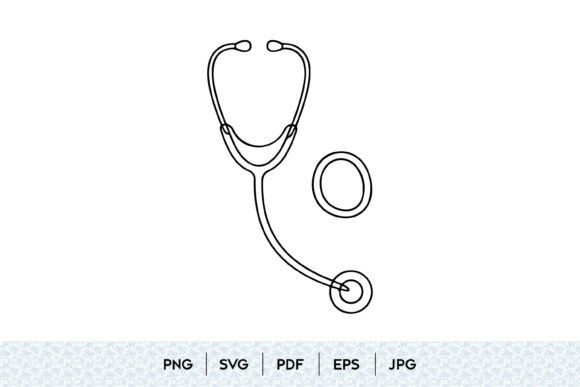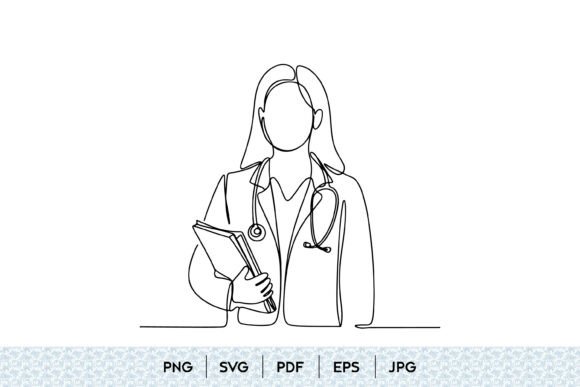
Female Doctor Line Art
A Minimalist Medical Motif That Stitches Clean — But Only If You Know Its Limits
I pulled up Female Doctor Line Art last week while prepping a custom embroidered tote for a local women’s health clinic’s staff appreciation day. The client wanted something respectful, modern, and instantly legible — no clipart vibes, no overwrought symbolism. Just quiet professionalism stitched in thread. That’s when I opened the files and really *looked*.
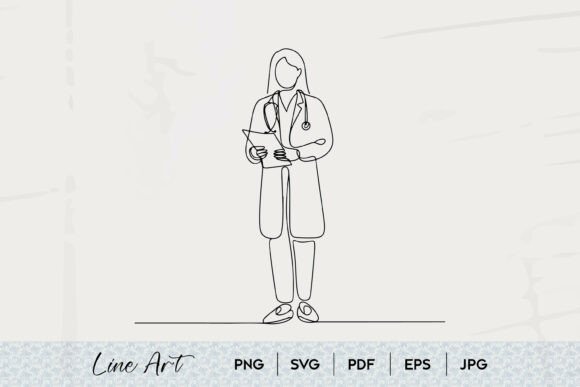
This isn’t a busy medical illustration with stethoscopes coiled like serpents or lab coats flaring dramatically. It’s a single, confident outline: a woman in profile, wearing a simple coat and holding a stethoscope at rest — not draped, not swinging, but held with calm authority. The line is smooth, unbroken, and intentionally thin. No shading. No internal detail. Just contour. That’s its strength — and its first real test.
Where It Shines: Clean Surfaces, Clear Intent
Female Doctor Line Art lives best on products where simplicity reads as intention — not compromise. Think: crisp cotton tea towels for a boutique apothecary, structured linen pillow covers for a pediatrician’s waiting room, or minimalist sweatshirt embroidery for med students launching their own wellness brand. On a medium-weight canvas tote? Perfect. The line holds shape without bleeding, and the negative space around it gives breathing room — essential for stitch clarity.
It also works beautifully as an embroidered patch. Because it’s pure outline (no fill areas), you can easily convert it to a clean satin-stitched border or run it as a delicate running stitch — ideal for baby caps, scrub top pockets, or aprons where subtle branding matters more than bold graphics. As a Graphics asset, it scales cleanly across digital mockups too: one PNG version looked just as sharp on an Etsy thumbnail as it did on a printable product label.
Where It Needs Careful Handling
Don’t drop this into a tiny 2-inch hoop and expect magic. The stethoscope loop and the curve of the jaw are elegant — but they’re also fine. On stretchy fabric like ribbed knit tees or lightweight jersey, those curves can distort unless you use cutaway stabilizer *and* reduce stitch speed. I tested it on a soft organic cotton onesie — lovely fabric, terrible for fine outlines without backing. Without proper stabilization, the line wobbled slightly near the ear. Not ruined — but noticeable enough that I’d hesitate to sell it as a premium baby embroidery piece without confirming the stabilizer match first.
Dark fabrics demand attention too. Since Female Doctor Line Art relies entirely on contour, thread color contrast becomes non-negotiable. A charcoal grey thread on navy fabric? You’ll lose definition. Stick to high-contrast combos: white or bright teal on black, deep burgundy on cream. And always test on scrap — especially if you're planning holiday embroidery (think: embroidered kitchen towels for nurse friends) where presentation is part of the gift’s value.
Real Impact on Your Craft Business
This design quietly elevates handmade product perception. It doesn’t scream “medical” — it *suggests* competence, care, and quiet confidence. That matters for Etsy sellers positioning themselves as thoughtful creators, not just print-on-demand resellers. When customers see this on a personalized gift — say, a framed pillow cover for a new resident’s graduation — they read intention, not inventory.
But here’s what shifts buyer engagement: consistency. Use Female Doctor Line Art across your shop — on a patch, a tote, a printable card, even a small logo variant — and it starts functioning like a visual signature. That builds brand recognition faster than any slogan. For small shop owners curating niche collections (e.g., “Gifts for Healthcare Workers”), this Illustration becomes a unifying thread — literally and figuratively.
Practical Notes Every Embroidery Designer Should Check
- Test before committing: Run it on scrap fabric matching your final project’s weight and stretch — especially for curved surfaces like caps or baby hats.
- Review stitch density: Since it’s line art, avoid heavy fill stitches unless converting to applique. Stick to running or satin stitch for clean edges.
- Confirm hoop size compatibility: The original SVG and EPS files scale well, but zoom in on corners before resizing down — tiny details (like the stethoscope’s bell) may vanish below 3 inches.
- Inspect thread color interaction: Try black and white mockups side-by-side. Does the line pop equally on light and dark backgrounds? If not, adjust thread choice — not the design.
- Stabilizer is your co-designer: Medium-weight cutaway works best for most apparel; tear-away for stable linens or towels.
- Licensing matters: Since this is sold as a digital embroidery file, verify whether commercial use (i.e., selling finished embroidered patches or apparel) is permitted under its license — don’t assume.
Final Thought: It’s Not Just a Graphic — It’s a Tone Setter
As a designer who’s stitched hundreds of medical-themed pieces — from cartoonish nurse motifs to overly technical anatomical sketches — Female Doctor Line Art stands out because it respects the wearer. It doesn’t reduce identity to a uniform or a tool. It captures presence. That makes it unusually versatile: equally at home on a child’s nursery wall (as a framed embroidery) and on a boutique’s limited-run sweatshirt collection.
Just remember: line art gains power through precision — not padding. So treat it like a fine pen drawing, not a bold poster. Use it where clarity, calm, and craft converge. And if you’re building a craft business around meaning — not just motifs — this one earns its place in your design assets library.